If you are missing several teeth or facing the loss of your remaining natural teeth, you are likely weighing two major concerns: what will treatment cost right now, and how will these new teeth actually feel when you are eating, talking, and living your everyday life?
Before comparing prices, it is crucial to understand exactly what each option replaces. A single implant and crown is a vastly different treatment than a conventional full denture. Furthermore, some modern dentures actually attach to implants, meaning the choice isn’t always strictly one or the other.
If you are exploring dental implants vs. dentures in Chandler, AZ, the best place to start is with a complete treatment plan tailored to your specific mouth. From there, you can accurately compare the surgery involved, daily cleaning routines, long-term maintenance, and how you want your new smile to function.
First, understand which teeth you are replacing
A dental implant is an anchor placed in the jaw. Depending on the treatment plan, implants can support an individual crown, a bridge, or a denture. The implant and the replacement teeth attached to it are separate parts.
A conventional full denture replaces all the teeth in an upper or lower arch and is removable. A partial denture replaces some missing teeth while others remain.
That distinction matters when you read an advertisement or receive an estimate. Ask: “Is this price for one tooth, several teeth, or a complete upper or lower set?”
How do the main options compare?
| Option | What supports it? | Do you remove it at home? | What needs ongoing attention? |
|---|---|---|---|
| Conventional full denture | The tissues and underlying ridge of the mouth | Yes | Fit, denture surfaces, and oral tissues |
| Removable partial denture | A combination of remaining teeth and tissues, depending on its design | Yes | Supporting teeth, fit, and cleaning |
| Removable implant denture | Implant attachments, with support varying by design | Yes | Implants, attachments, denture fit, and cleaning |
| Fixed implant teeth | Implants in the jaw | No; professional removal may be needed | Cleaning around and beneath the restoration, implant health, and components |
| Traditional dental bridge | Natural teeth beside a gap | No | Supporting teeth, the bridge, and cleaning underneath it |
(These are broad descriptions. The design must suit the available support and the teeth being replaced.)
Watch: How a Removable Complete Denture Works
This animation shows a conventional complete denture, one of the options compared above. It does not demonstrate an implant-supported denture or compare treatment prices.
What is the difference between implant dentures and fixed implant teeth?
A removable implant denture, sometimes called an implant overdenture, attaches to implants but comes out for cleaning. The attachments help it stay in place. They also introduce components that need professional checks and may need maintenance.
Fixed implant teeth stay in place during daily use. You still need to clean around the implants and beneath the replacement teeth. The best design for you depends partly on whether you can comfortably maintain it.
Neither design should be described as maintenance-free.
How much do dental implants and dentures cost in Chandler?
There is no one-size-fits-all price tag for tooth replacement. Your total cost will depend on how many teeth need replacing, the type of restoration you choose, any necessary preparatory work (like bone grafting or extractions), and the follow-up care required.
A conventional denture sits on the gums and does not include surgical implant placement. Conversely, an implant treatment plan involves both surgical procedures and the final restorative teeth. This is why two plans replacing the exact same missing teeth can have drastically different initial costs.
When consulting with a dentist, always ask for a clear, itemized breakdown so you understand exactly what you are paying for. Before making a decision, ask for a written breakdown covering:
- The teeth or arch included in the plan.
- Examinations, imaging, and any preparatory treatment.
- Implant placement and connecting components, if proposed.
- Temporary teeth and the final restoration.
- Fitting appointments and adjustments.
- Follow-up visits and likely maintenance charges.
Ask your insurer what it will contribute to that specific plan. For any financing arrangement, compare the total repayment amount as well as the monthly payment.
Ready to Review Your Options in Chandler?
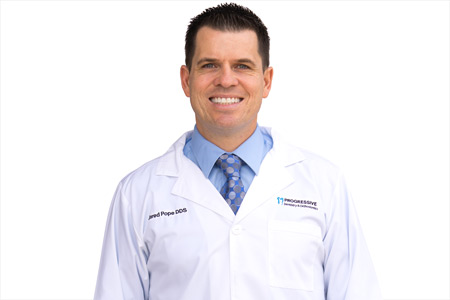
Online estimates can only tell you so much. At Progressive Dentistry & Orthodontics, we provide transparent, itemized treatment plans so you know exactly what to expect. Request an assessment with Dr. Jared Pope to discuss your unique needs, or read more about our dental implants.
Which option lasts longer?
An implant can remain in the jaw while the crown, bridge, or denture attached to it needs attention. Likewise, a denture may remain usable but need its fit improved as the mouth changes. Comparing only the number of years misses these differences.
With conventional dentures, fit can change
Changes in the supporting tissues and ridge can affect how a denture sits. Depending on its condition, the dentist may recommend an adjustment, a reline to improve the fitting surface, or replacement. A change in fit does not automatically mean you need a completely new denture.
With implant treatment, different parts can need care
The implants, surrounding tissues, attachments, and replacement teeth all need monitoring. A worn attachment or damaged replacement tooth is different from an implant losing its support in the jaw. Both deserve assessment, but they may involve very different treatment.
The practical question is: “What could need repair or replacement in this plan, and what would that involve?” There is no reliable basis for promising that one option will last a lifetime or always cost less over time.
Where do dental bridges fit into the decision?
A traditional bridge may be relevant when some teeth are missing and suitable neighboring teeth remain. It uses those teeth for support, usually through crowns. It is a different situation from replacing a completely toothless arch.
A dental implant bridge is supported by implants instead. It can replace a group of missing teeth without necessarily placing an implant for every replacement tooth. The design and support requirements need individual planning.
If you are mainly comparing options for a smaller gap, read our dental implants vs. bridges guide. You can also explore our crowns and bridges service.
What matters besides cost?
Your health and healing
Implant placement involves surgery. Potential complications include infection, failure of the implant, and injury to nearby structures. Smoking and some health conditions can affect healing or treatment risk. Your dentist needs to consider your medical history and oral health before recommending it.
Your treatment timeline
Implant healing can take several months or longer. Ask what you would wear during that time and when the final teeth would be fitted.
Some dentures can be fitted immediately after extractions, but they may need relining or replacement as healing changes the mouth. “Teeth on the day” does not necessarily mean treatment is complete.
Your daily routine
Removable dentures need daily cleaning, and your mouth still needs care. Implant restorations also require cleaning and regular follow-up. Ask for a demonstration of the routine for each proposed option, particularly if reaching certain areas or handling small cleaning aids is difficult.
Questions you may have
Here are a few common questions we hear from patients at our Chandler office when they are deciding between dentures and implants:
“If I can afford implants, are dentures still worth considering?”
Yes. Price alone does not settle the decision. Your health, remaining teeth, available support, preferences, and ability to maintain the replacement all matter. A suitable plan should account for those needs together.
“My denture moves. Does that mean I need implants?”
Not necessarily. The first step is to have its fit and condition checked. An adjustment or other denture treatment may help. Implant retention is another possibility to discuss if it suits your circumstances.
“Can I have implants and still remove my teeth for cleaning?”
Yes. That is the idea behind a removable implant overdenture. It uses implant attachments for retention while allowing you to take it out. It is different from a fixed restoration.
“If I have no natural teeth left, do I still need dental checkups?”
Yes. Your dentist still needs to check your oral tissues and the fit and condition of your dentures. Contact the practice if soreness persists, the denture becomes damaged, or its fit changes.
Discuss your next step in Chandler
You do not need to choose a treatment before your appointment. Start with what matters to you: the foods you want to eat comfortably, whether you prefer removable teeth, your budget, and the time you can allow for treatment.
Progressive Dentistry & Orthodontics in Chandler can assess your missing teeth and discuss suitable treatment options. Learn about Dr. Jared Pope’s background or contact the practice to arrange a visit.
Our office is at 2995 W Elliot Rd Unit 1, Chandler, AZ 85224. Call (480) 775-8600.
This article provides general education. Treatment suitability, fees, and expected results require an individual dental assessment.
References
- Wright S, Ucer C, Khan R. Best Practices in Implant Dentistry. 1st edition. Wiley, 2025. Chapter 1, “Standards in Implant Dentistry,” pp. 1–6.
- Mitchell L and colleagues. Oxford Handbook of Clinical Dentistry. 6th edition. Oxford University Press, 2014. Chapter 7: treatment planning, pp. 264–265; bridges, pp. 268–269; removable partial dentures, p. 282; complete dentures, pp. 292–294; maintenance, p. 304; overdentures and implantology, pp. 314–317.
- American Dental Association, MouthHealthy. “Dentures.”
- U.S. Food and Drug Administration. “Dental Implants: What You Should Know.”
The explanations above synthesize relevant passages in original wording. These references do not imply that their authors reviewed or endorsed this article.